Anchoring furniture to the wall, the right way
By Pro Install Greg · Updated · 3 min read
Anchor every dresser, bookcase, wardrobe and TV stand that is taller than it is deep, using the tip-over kit that comes in the box or a heavier strap. Fasten it into a wall stud whenever you can; where there is no stud, use an anchor rated for your wall type, never the plastic plug alone. The anchor only works if both ends are solid: the wall and the back panel of the furniture.
Key takeaways
- Tall furniture with drawers is the highest tip-over risk, because open drawers shift the weight forward.
- A screw into a wall stud is the strongest anchor point; drywall alone is the weakest.
- Brick, block and plaster walls need masonry or plaster anchors, not the plastic plugs that come with most kits.
- The strap has to fasten into a solid part of the furniture, such as the top rail, not the thin back panel.
- A TV on a dresser is a tip-over risk on its own and should be mounted or strapped separately.
Planning this in Nashville or Middle Tennessee? Send a photo and get a flat quote for furniture assembly.
(615) 930-7739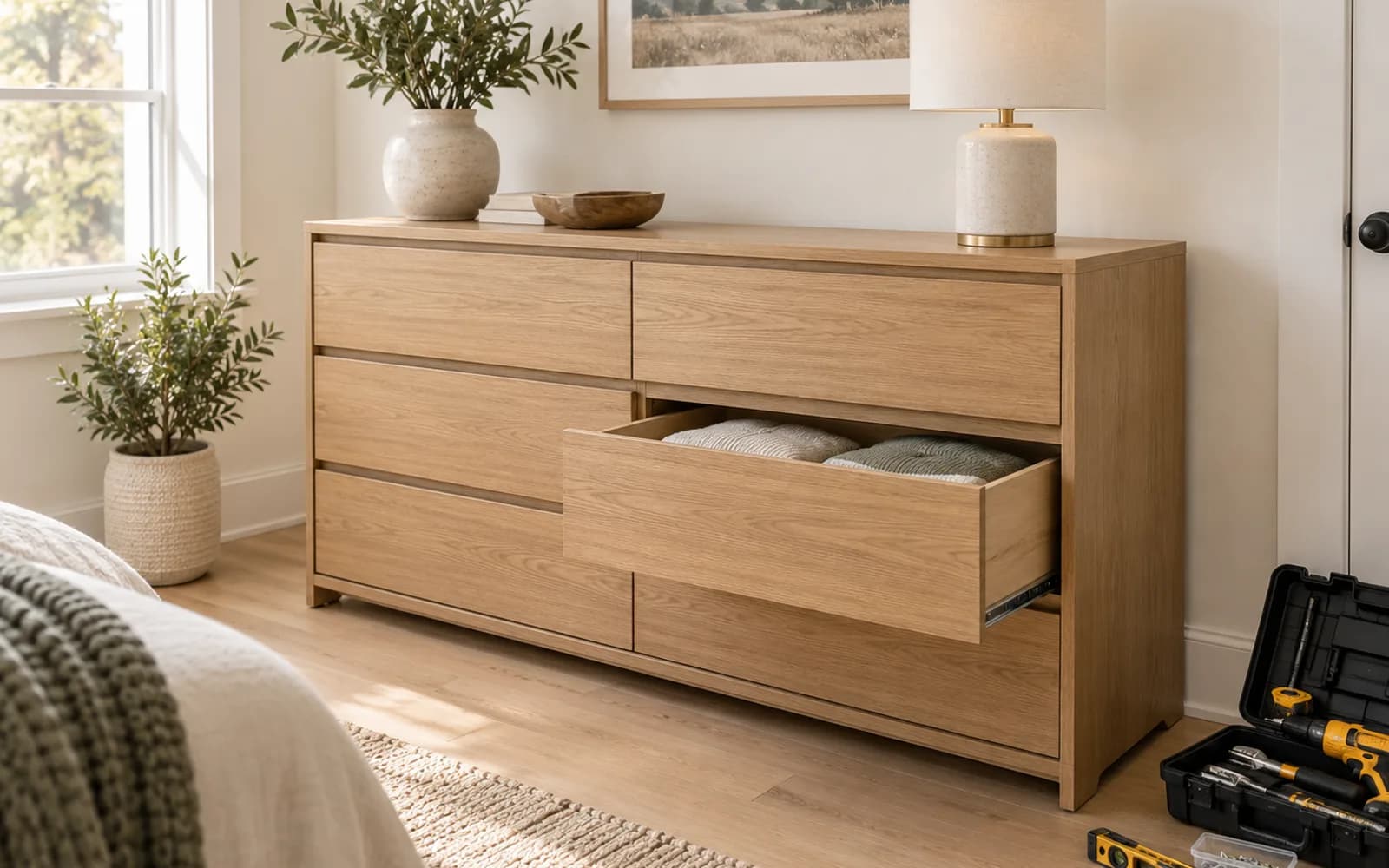
What needs to be anchored
Anything tall, narrow or heavy at the top. Dressers and chests are the classic case: pull out two drawers and the center of gravity moves forward, and a child climbing the drawers like steps does the rest. Bookcases, wardrobes, display cabinets and media units go on the same list.
- Dressers, chests of drawers and nightstands with drawers.
- Bookcases, cube storage and display shelving.
- Wardrobes and modular closet towers such as IKEA PAX.
- TV stands, and the TV sitting on top of them.
Anchors by wall type
| Wall | Best anchor | Avoid |
|---|---|---|
| Drywall over a wood stud | Wood screw straight into the stud | Fastening to drywall beside the stud |
| Drywall with no stud behind | Toggle bolt or heavy-duty drywall anchor | The plastic plug from the kit |
| Plaster and lath | Screw into the stud, or a plaster-rated anchor | Anchors that crack the plaster |
| Brick or concrete block | Masonry anchor in a hammer-drilled hole | Screws into the mortar joint alone |
The steps
- Set the furniture in its final spot and mark where the top meets the wall.
- Find the stud with a stud finder and confirm it with a small test hole before drilling the real one.
- Fasten the bracket or strap to a solid part of the furniture: the top rail or a side panel, not the back sheet.
- Fasten the other end to the stud, or to an anchor rated for the wall, and pull the strap snug.
- Pull the furniture forward gently. It should stop within an inch and not rock.
Anchoring is part of every furniture assembly job we do: tall pieces get fastened to framing before we leave, not left with the kit in the drawer.
Mistakes that leave it free to tip
- Screwing into the back panel. On most flat-pack furniture it is thin fiberboard that tears out under load.
- Trusting a plastic plug in drywall. It holds a picture frame, not a falling dresser.
- Leaving slack in the strap. A loose strap lets the piece build momentum before it catches.
- Forgetting the TV. A screen on top of a dresser adds weight exactly where it does the most harm.